Saturday, February 27, 2010

Unnatural Nature


Ever notice how flowers are more of a symbol than a being? We actually have a tendency to take natural things out of their environment and make cute pillows out of them. Like the one under my head right now. We do so many things with flowers. We make desktop photos of them with smiling faces. We print them all over our bedsheets and curtains. We cut them down and sell them in stores. We buy fake ones and set them out on our tables or pin them in our hair.

Isn't this somehow unethical? Maybe it's just the ridiculousness of it all that strikes me so much. I think it is rare that any of us see living versions of these flowers that we so frequently encounter is false forms. Do we even really appreciate them? There is something inside of us that is attracted to flowers. To their shape, their feel, their smell, their colors. Flowers are very sensual to us. But we transform them so much that the very things we appreciate with our senses are gone.

Recently, I have wanted to start a garden and grow vegetables, but maybe I should consider growing flowers just for the beauty they bring. Sure, it's important to do functional things, but there is also a time to simply do something for the joy it brings. That's a lesson I've recently been learning in life. I need to take time off from all my daily "to do's" and do things just because I enjoy them. *Note to self*

Saturday, February 20, 2010

Inescapable Sound


With all the stress I've felt the pressure of lately, I tried to stop worrying about it for a few hours this afternoon in between commitments. I laid down on my bed and tried to calm down. Fail. The washer and dryer are too loud. I put in earplugs. Lovely. Then the earplugs started to get uncomfortable. Shoot.

I decided to go out onto my porch. Sounds like a wonderful solution, right? I wanted to hear the sounds of the wind in the trees, birds singing, and nothing else. All I could hear was traffic. It was horrible. At least the sounds were constant enough that it still kind of put me into a daze. But it was so disappointing.

Where can you go to escape all the noise??

Friday, February 19, 2010

Immortality

Every now and then (especially in this honors class), I think about humanity and this infinite search we seem to have for immortality. I don't think that I personally seek immortality, but that we as a collective being all hope never to die. I think it's messing up the world. We aren't meant to live forever. We have to realize that death is real. And it is only by death that we truly come to value life.

What happens when we try to live forever? People are miserable. People are kept on life support, despite any ability to ever come back and live fully. The average age on the planet rises. Retirement gets set back. Jobs don't open up. The economy is a wreck. Houses are foreclosed on. Everyone's in debt. Companies go bankrupt. Cities become overcrowded. The world becomes overcrowded. Food production has to keep up with the population's needs. Organisms have to be genetically modified to meet our changing needs. We try to make them immortal too. Other organisms grow stronger. Horrible outbreaks of disease occur. We have to invent a vaccine or antidote. The virus re-invents itself. Every thing we create causes another problem. People, plants, and animals all die.

We can't control it, but we sure keep trying to. When will the world ever realize that life is cyclical? Nothing can just keep going forever. There must be an end, because all things have come from something else's end. We wouldn't be alive if it weren't for the plants and animals that die for us every day. Those would not be alive if it weren't for the organisms that died for them. Even molecules go through cycles. Nothing stays the same.

Except for God. He and He alone is the exception to this whole ordeal. He never changes. He has no beginning and no end. But the same statement is true:

We could not be alive today if He hadn't died for us.

His death was the greatest death. A death to end all deaths, because He conquered it. He is alive today, and it is through Him that I live and that others live.


...let me not forget...

Sunday, February 14, 2010

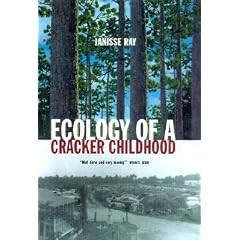
Ecology of a Cracker Childhood


I pushed myself pretty hard to finish this book early. For most of the book, I was honestly kind of grudging the fact that I had to read it because I had so many other things to do, but eventually I grew to enjoy it.

I don't think it called for as much response as the last book we read, which made class discussions somewhat uninteresting. The writing style reminded me of The Grapes of Wrath in the way she alternates chapters of things that happened in her life with environmental concerns. Janisse Ray is right, nobody would ever read a book about pine trees. But as I finished, I became amazed at how much life (how many species) is (are) effected by the decline in longleaf pine populations. Through the experiences she described, even though I have no experience with the species she described, I became fascinated with them and wanted the best for them. I don't want them to go extinct just because humans have become selfish in their lust for the land.

In general, it makes me sad when I see a beautiful area be torn up and a shopping mall or neighborhood go in. I often ask myself: Is there any land in this state that nobody owns? Ownership is such a big deal here. I wish I had a place that I could call mine. Not by money but by experience. I want to not be run off the property when I find something beautiful and special. Why is no land free in this, the Land of the Free?

Recess Restrictions


A while back, we talked about the crazy things that are going on at schools these days. They're not allowed to play Red Rover anymore. No more Dodgeball. No more Tag. No more running. Are you kidding me?

It is absurd that these are the things that parents fight for. "My poor Jonny got hurt. Boys should be playing such rough games." Wah. Maybe Jonny should learn to toughen up. And there's so much whining and complaining about obesity being a bigger and bigger problem (literally?). Same with AD(H)D. Why don't we let them do fun things? Aren't those of us who played those games somehow better off for it?

Actually, I have to take that back. I wasn't one of those kids who played those games. I did every now and then, but mostly I got hurt. So I was the kid who got fat, too. Third grade I was a cute normal little girl. Come fourth and fifth grade, I was a balloon. What happened? I stopped playing on the playground.

Problems aren't solved by telling kids they're not allowed to do things. Kids are just going to find other ways to get hurt that aren't against the rules. It just happens. Let them play. Let Jonny get hurt. Let little Susie get hurt too. They'll learn not to play with kids who are bigger or meaner than them.

Kids learn by experience. Let them!

Monday, February 8, 2010

Geocaching


For several years, I had been curious about geocaching. I can't remember when I first came across the term, but I always thought it was a really awesome idea: little boxes and things being hidden in the wilderness for others to find simply based on GPS coordinates. It wasn't until this past year that I actually found one.

At Enchanted Rock, I stumbled upon an ammo box with my friend Dan. We were confused by its presence in the obscure place we were in, and found out that it was a geocache. A few months after that coincidence, I was talking to a new friend (who is now my boyfriend) and one of us mentioned geocaching. Basically, that was the deal-maker. ;-) He was totally impressed by the simple fact that I knew what a geocache was.

I wonder how many people I know have even heard of such a thing. I swear I read about it in some random magazine or on the internet somewhere a long time ago and haven't ever forgotten about. We haven't talked about it in class, but I'm curious to find out. It seems that anytime either of us mentions it, we have to explain what we're talking about. It's fun to realize that we have a special hobby, but it also gets a little old having to explain.

Walking around the other day, I started to consider the ethics of geocaching. I haven't come to any conclusion yet. Is it 'ethical' to plant a man-made thing in wild places with the intent of other men finding it with the help of satellites and an electronic tool (GPS)? How much do we really experience nature when we go out looking for these objects? Does this hobby encourage a connection to the wild or is it a cleverly disguised disconnect from the natural world?

It is simply a modern-day treasure hunt, where you don't really get any prize for finding the treasure. And there are plenty of them right in your own neighborhood. I think it's a lot of fun. I feel accomplished when I find one. But maybe that's just me. I've always enjoyed 'seek and find' type games like Where's Waldo and word searches. In a sense, geocaching is just a tangible version of those things on a global scale. The possibilities are practically endless.

Wednesday, February 3, 2010

Medicating Childhood


To be forward, I am not a fan of medicating for any reason. I believe that changes of lifestyle can really affect health conditions. And I don't think I say that out of ignorance, but actually out of my own experience. And my own fears of being constantly medicated. Doctors are far too prepared to write prescriptions.

I found out that I have Cluster Headaches shortly after I finished high school. A couple of different doctors had misdiagnosed me, just saying I had migraines and giving me a medicine to turn off my pain sensors. I saw a chiropractor because I was referred, and although it was nice to get a professional massage every week or so, it didn't really help my headaches or relieve my tension overall. The chiropractor told me to keep a dietary record to see if there might be food allergies triggering my headaches, but try as I might, I couldn't find any links.

Eventually I went back to the doctor because I was having headaches so often, and this time he gave me a daily "anti-seizure" medication. I thought this was far too dramatic. I took it for a while but felt uncomfortable. How would I ever know if it was doing any good? So what if I didn't get a headache that day; it wouldn't necessarily be because of the medication.

So I went back and explained. This time I came out with a pain killer and muscle relaxer. It had addictive medication in it. I avoided taking it unless I was miserable. Sometimes I used it when I shouldn't have, though, like when I didn't want to get sore standing all night at an outdoor show. Not good.

I noticed more strange characteristics of my headaches and pretty much did a self-diagnosis. Every day at about 11AM, always on the right side, with a red, watery eye, a runny right nostril, and tremendous pain. That's how I knew they were cluster headaches.

I tried not to take medicine unless it really got bad, which was not always a good idea because I dealt with a lot more pain than I needed to, but I am glad I haven't constantly medicated myself. Instead, I tried to regulate my sleep and eating patterns. I drink more water. These things have helped but haven't necessarily stop them. Even so, when they happen, those are the first three things I try to do before I take anything for them.

Children these days get medicated for having too much energy. Why don't we let them play outside instead of saying they have a disease? They are just kids. If they take it every day, how will we ever know if they grow out of the hyperactivity? We keep them cooped up in school and in books all day, but that's not how life was meant to be lived. There is no vitality in that. They need to get out and spread their wings.

And what about depression? I don't doubt that these medications are effective, but at what point does a person decide to stop taking anti-depressants? A more effective choice would probably be for those people to go to counseling, to actually understand what's going on mentally and emotionally, and then use that understanding to create real change. What's the good in medicating depression? Shouldn't people learn to deal with problems instead of chemically altering themselves?

Last semester, I even learned that there are cases of people recovering from cancer just by changing their diets. That is miraculous. It is my understanding that a healthy diet might do this because it is functioning with proper amounts of the vitamins and minerals involved in cell replication. You are what you eat. Elements of the foods you eat get into your cells and become your cells, to an extent. Your body can potentially recover from cancer by simply enabling it to be healthy, rather than by causing its cells to be destroyed.

We are exposed to millions of chemicals on a daily basis and only a portion of those were ever intended to go into our bodies. Why it is so popular to pop pills to "fix" a problem, I may never understand. Then again, there are health issues way beyond me as well, so I may be totally off the track...

The Problem of the Television


I grew up watching TV all the time. No, wait. That's not quite true. In later elementary and middle school, after I stopped playing with my neighbors, I watched TV a lot. I came home from school and turned on the television while I had a "snack." These snacks often consisted of the majority of a package of Pringles, EasyMac, or a whole can of corn loaded with butter. Those were my favorites.

Besides that, there wasn't really anything wrong with what I was doing. I watched The Brady Bunch for hours. Boy Meets World. Sister, Sister. Family Matters. Step by Step. Fresh Prince. Home Improvement. Things of that sort. Those are good shows! But I also watched soap operas. All My Children and One Life to Live, to be exact. That's another two hours a day (minus commercials, because I could fast-forward). Did I ever do anything else? I really don't know.

I hardly spent time with friends outside of school. My best friend next door moved away in second grade and a little boy moved in next door. My neighbor down the street went to a different school and we lost touch. Other kids got too old. Other neighbors moved in and we spent time together for a while, but then I got too old and "mature" for them, too. So I spent my time inside. Watching TV. Except for when I went to Girl Scouts. Which is probably how the other side of me that enjoys adventure and creativity got nourished. I didn't do those things alone.

Even at dinner, the TV was always on. Dinner at home wasn't the family time it should have been. It was time to watch TV shows. And for my parents, it still is. I don't know them as well as I could and I blame that on TV, to an extent.

The problem is, I like TV. There are some shows I can watch all day long, like America's Next Top Model (confession!). But there came a time when I realized the detriment TV was to me and my relationships. It's just too easy to get wrapped up in the false reality that resides in a little (or big) box of electricity. Aren't there better ways to spend time?

I noticed in high school after I developed a group of "close" friends, that all we seemed to do together was watch Family Guy. And most of what was said somehow quoted Family Guy. Or GI-Joe and other internet shorts. They weren't relationships. I didn't know anything about those people. I quit that. I wanted real life to be real.

Sadly, the way those high school friends of mine are is the way everyone is. That's normal. When I spend time with my fraternity, people say things all the time that are quotes from some show or movie or internet clip I've never seen or heard of. Who the heck is Charlie the Unicorn? I feel left out, but is it really so bad?

And then there are things I pick up on like the accent from Borat. I never knew it was associated with that movie. People just started talking that way and I thought it was funny. I was able to do it too, so sometimes I do. And it's fun.

There are just so many better ways to spend time than staring at a screen. I find myself incredibly busy, and simply cannot comprehend how people have the free time to devote to YouTube and Lost and Anchorman. I wonder if they feel like they're missing out on anything by putting so much into these fictional things?

The only thing I realize I miss out on because I don't pay attention to media is world news. I'm trying to become more aware of that by checking websites for news when I think to. It's not entirely healthy to live in isolation. But I don't intend to change my choice not to watch TV much, if at all. I would very much rather spend my time accomplishing things or getting to know someone better, actually sharing life with them. I just have to learn to be more creative with getting-to-know-you activities. Cutting out TV causes you to have to be more creative with your life.

Monday, February 1, 2010

Nature: An Inalienable Right


In Richard Louv’s article, “A Walk in the Woods,” (Orion Magazine, March/April 2009) he discusses some public and private opinions on children’s “right to a walk in the woods.” Knowing the article comes from Orion Magazine, it is easy to assume that Louv would strongly advocate the benefits of nature and each person’s individual right to experience it; in this way, the article holds no surprises. On the other hand, Louv gives several examples to support his opinions that are rather unexpected.

He begins with a reference to a “little girl in Raytown” whose favorite tree was one day cut down. Louv quotes her as saying that she felt “like they cut down part of me.” This was his first way of showing the importance of nature to a young person, and supporting the idea “that human beings are hard-wired to get their hands wet and their feet muddy in the natural world”: E. O. Wilson’s hypothesis of biophilia, that a connection with nature is part of a person’s essential self. I found this idea striking, having just returned from a surprisingly muddy walk in the woods. I felt myself freed from my usual sense of having to do things right and needing to stay neat and clean. I got myself into mud without realizing it and kept forging ahead, looking for a way out. As I continued, the prospects of finding dry land became ever more dim. My destination was approaching and I decided to embrace my mistake. Why turn back when I could just get over myself and enjoy the situation? A little mud never hurt anybody. In fact, it was a lot of fun. Was the mud really an “essential part” of myself, though? I can’t quite attest to that.

What I can confirm is what happened before going on the walk. I wasn’t alone; I was with my boyfriend Jared and my two cousins ages four and seven. Louv refers to some personal research at his former elementary school where he learned that the children “preferred playing video games” to nature. “They favored indoor activities—and when they were outside, they played soccer or some other adult-organized sport,” he elaborates. I personally experienced this sad reality. It was next to impossible to pull my cousin Jaxon away from his personal video game. I’m not sure what convinced him that it would be fun to come explore with us besides the fact that we had somehow convinced his younger brother, despite his worries. “But there are bears in the woods!” little Spencer exclaimed. “But it’s dark in the woods!” he contested. In a brief conversation with his mother, I discovered (as I suspected) that she had used these things to convince him that the woods are scary and not safe—but she didn’t discourage it if an adult was involved. Somehow, he got over those irrational fears.

These kids needed to spend some time outside. As much as Spencer complained about being tired and asked us to wait for him, I think he enjoyed it. (He was just walking through really tall grass, which takes a lot of extra work for someone three feet tall.) The few instances of either of them pretending a stick was a gun or the mud was lava didn’t last long, though. If I followed along with their pretend, they had to inform me that, “Alyssa… it’s not a real gun—It’s just a stick.” The reality of the lack of exposure kids have to nature these days is just depressing.

There are other reasons that nature is important to one’s well-being besides exercising the imagination. We have heard several of these reasons, including the “strong correlations between experience in the natural world and children’s ability to learn, along with their physical and emotional health. Stress levels, attention-deficit hyperactivity disorder, cognitive functioning—and more—are positively affected by time spent in nature.” Louv refers to Howard Frumkin, director of the National Center for Environmental Health at the Centers for Disease Control and Prevention, who suggests that nature “can be seen as a powerful form of preventative medicine.”

The rest of Louv’s article was more philosophically-grounded, while at the same time addressing semi-political issues. He refers to this issue as a movement. People claim rights to so many things. Louv wonders, should we really try to push the right to the woods? The continued building, growth, and existence of neighborhoods that restrict their residents’ outdoor activities is a violation of constitutional rights. And as Louv suggests, is the right to access nature not, in its essence, included in our inalienable rights of Life, Liberty, and the Pursuit of Happiness? He urges readers to take steps and make choices to “ensure that children in every kind of neighborhood have everyday access to natural spaces, places, and experiences.” We are responsible for the future of this movement. Alongside a “strongly articulated moral principle,” a movement can be successful. The principle behind the right to access nature is incredibly clear and frankly, ridiculous to try to contest. We must make these principles known.